







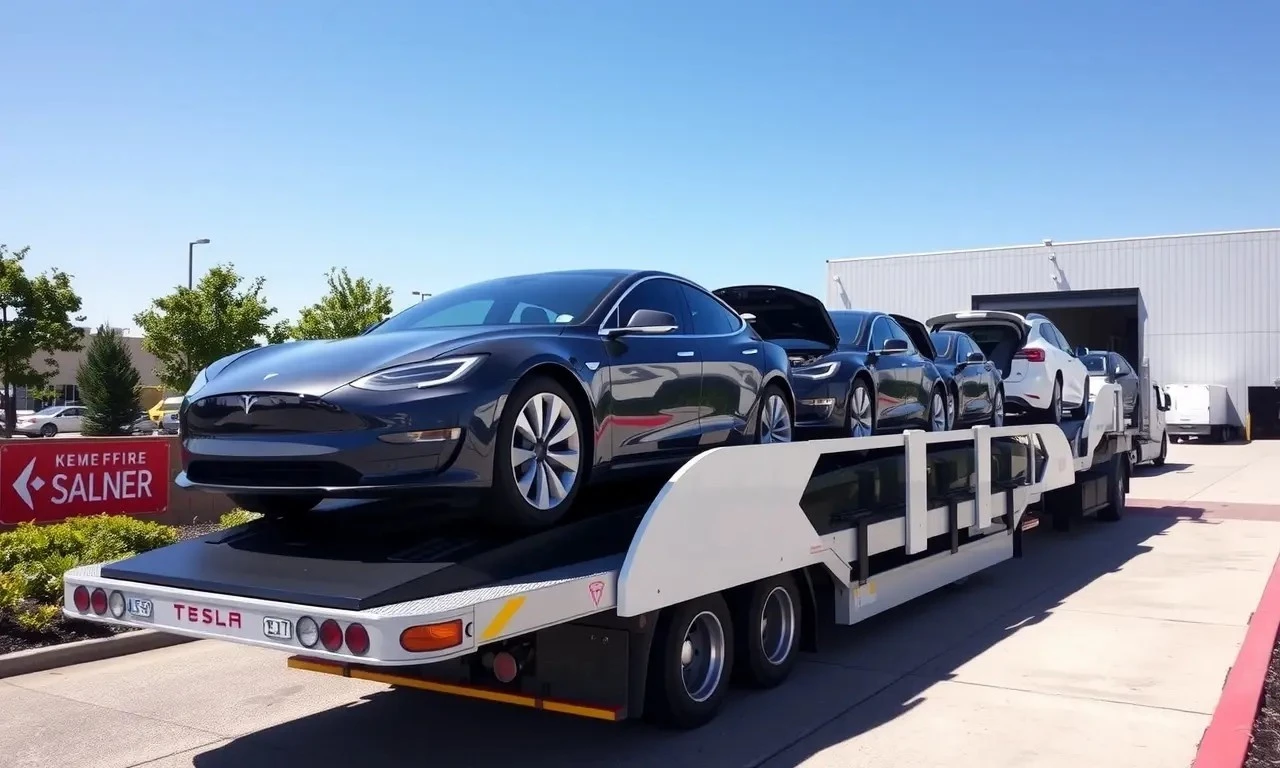
how are tesla cars transported
The logistics of transporting Tesla cars is a complex operation that involves a sophisticated supply chain and transport network. As a leading innovator in the auto industry‚ Tesla’s approach to logistics and distribution is both efficient and sustainable‚ utilizing various modes of transport including rail‚ truck‚ and car carriers. This article explores the intricate process of how Tesla vehicles are shipped from manufacturing sites to customers across the globe.
Manufacturing and Initial Handling
Tesla operates several manufacturing facilities worldwide‚ with major plants located in the United States‚ China‚ and Germany. The process begins at these facilities‚ where electric vehicles (EVs) are assembled. Once a Tesla vehicle is manufactured‚ it undergoes initial handling and quality checks before being prepared for shipping. This involves ensuring that the vehicles are ready for transit‚ which includes checking battery levels and securing the cars for transport.
Transport Network and Modes of Shipment
Rail Transport
Rail transport is a key component of Tesla’s logistics strategy‚ especially for long-distance domestic deliveries. Rail networks offer efficient freight capabilities‚ allowing Tesla to move large volumes of vehicles across vast distances. Trains can carry numerous car carriers‚ each loaded with Tesla vehicles‚ reducing the carbon footprint compared to individual truck transport.
Truck Transport
Trucks play a crucial role in the final leg of delivery‚ transporting vehicles from rail depots or ports to local distribution centers or directly to customers. Tesla uses specialized car carriers that are designed to handle electric vehicles safely‚ ensuring that each car arrives in pristine condition. This step is essential for maintaining Tesla’s reputation for quality and customer satisfaction.
Shipping and Ports
For international distribution‚ Tesla relies on shipping via major ports. Vehicles manufactured in the United States‚ for instance‚ are exported to other continents using container ships. The use of global shipping lanes is pivotal for Tesla’s expansion into international markets. Ports act as critical hubs in the supply chain‚ facilitating the import and export of Tesla vehicles. Handling at these ports involves meticulous care to prevent damage during loading and unloading.
Warehousing and Distribution
Once Tesla vehicles reach distribution centers‚ they are warehoused temporarily before being dispatched to customers. Warehousing serves as a buffer in the supply chain‚ allowing Tesla to manage inventory and align with customer demand. Distribution centers are strategically located to optimize delivery times and reduce transit costs.
Delivery and Final Handling
The final delivery of Tesla cars is often a personalized experience for customers. Tesla offers direct delivery services‚ where vehicles are brought to the customer’s doorstep. This approach not only enhances the customer experience but also streamlines the supply chain by reducing the need for intermediate dealerships. Proper handling during this stage is crucial‚ as it represents the culmination of Tesla’s logistics efforts.
Challenges and Innovations in Tesla’s Logistics
Infrastructure and Supply Chain Challenges
As Tesla continues to expand globally‚ it faces several logistics challenges‚ particularly related to infrastructure and supply chain efficiency. The need for robust transport networks and efficient distribution channels is paramount. Tesla continuously invests in infrastructure improvements and innovative logistics solutions to overcome these challenges.
Electric Vehicles and Sustainability
Tesla’s commitment to sustainability extends to its logistics operations. The use of electric vehicles in its fleet for local deliveries is one way Tesla reduces its environmental impact. Additionally‚ optimizing transport routes and utilizing fuel-efficient modes of transport are part of Tesla’s strategy to minimize its carbon footprint.
Technological Innovations
Tesla leverages technology to enhance its logistics operations; From real-time tracking of shipments to automated handling systems in warehouses‚ technology plays a crucial role in improving efficiency and accuracy. Such innovations ensure that Tesla remains at the forefront of the auto industry’s logistics practices.
The transportation of Tesla cars is a testament to the company’s innovative spirit and commitment to excellence. By integrating various modes of transport such as rail‚ truck‚ and shipping‚ and focusing on sustainability and technology‚ Tesla has crafted a logistics network that supports its global operations. As the demand for electric vehicles continues to rise‚ Tesla’s logistics strategies will evolve‚ ensuring that it meets customer expectations and maintains its position as a leader in the auto industry.
